Our History
The American labor movement built the middle class. These are the milestones, the strikes, and the laws that made the modern workplace.
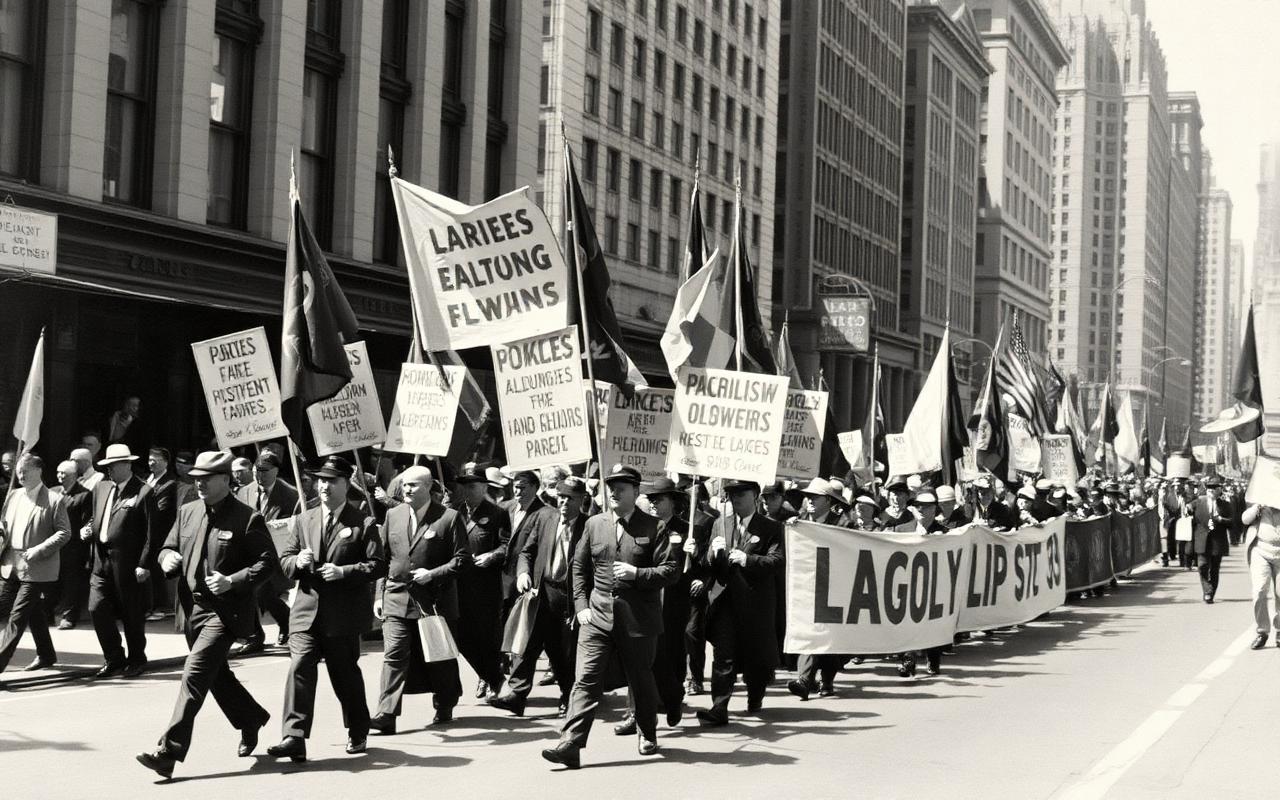
Timeline of Labor
- 1882
First Labor Day Parade
10,000 workers marched in New York City on September 5th, organized by the Central Labor Union — the unofficial birth of the holiday.
- 1886
Haymarket Affair
A rally for the 8-hour workday in Chicago ended in tragedy and galvanized the international labor movement.
- 1894
Labor Day Becomes Federal
Following the Pullman Strike, President Grover Cleveland signed the act making Labor Day a federal holiday.
- 1911
Triangle Shirtwaist Fire
146 garment workers — mostly young immigrant women — died, sparking landmark workplace safety legislation.
- 1935
National Labor Relations Act
The Wagner Act guaranteed private-sector workers the right to organize and bargain collectively.
- 1938
Fair Labor Standards Act
Established the federal minimum wage, the 40-hour work week, and child labor protections.
- 1955
AFL-CIO Merger
The American Federation of Labor and Congress of Industrial Organizations united, representing 15 million workers.
- 1963
Equal Pay Act
Required employers to pay men and women the same wage for the same work.
- 1970
OSHA Signed Into Law
Guaranteed every American worker the right to a workplace free from recognized hazards.
- 1993
Family and Medical Leave Act
Granted eligible workers up to 12 weeks of unpaid, job-protected leave for family or medical reasons.
- 2023
UAW Stand-Up Strike
Auto workers won record contracts ending two-tier wages and securing the largest pay raises in decades.